
The difference between 14-karat and 18-karat gold and gold colors
14-karat gold vs. 18-karat gold
Amount of gold
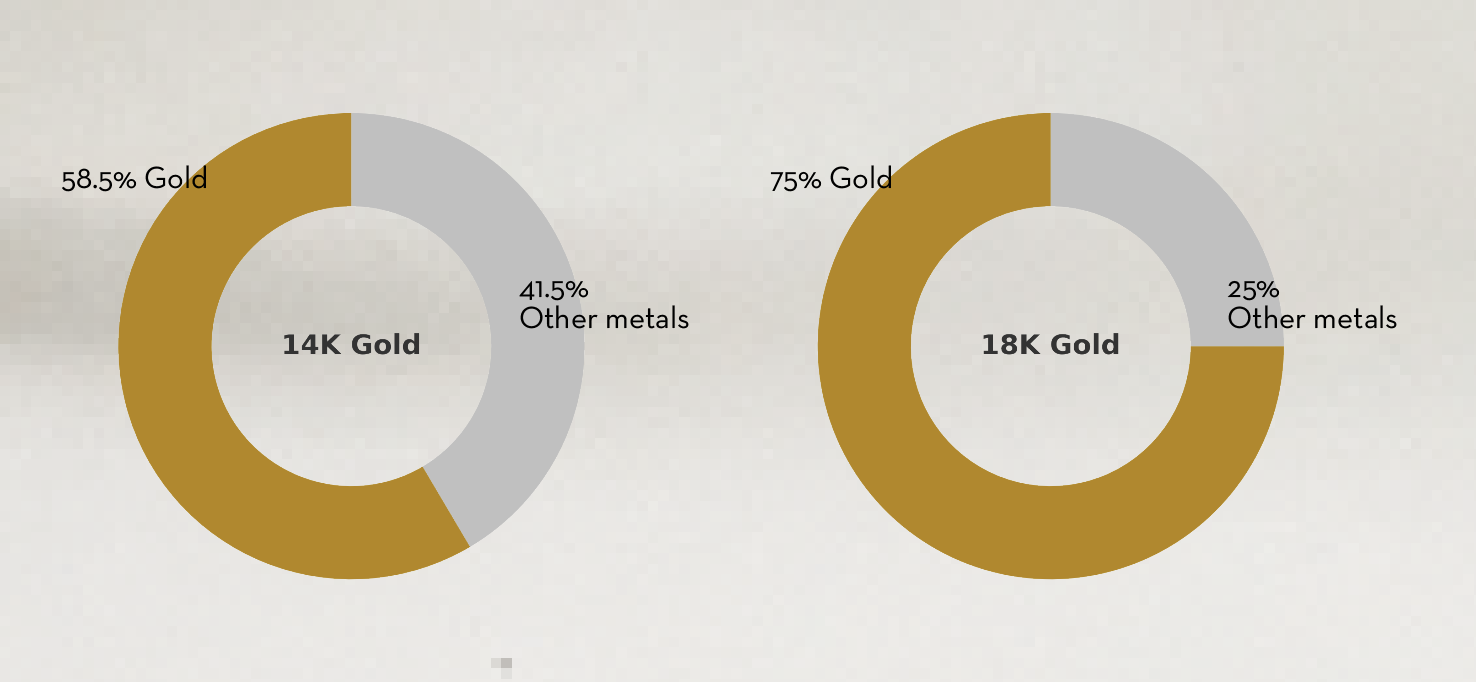
14-karat gold contains 58.5% gold and 41.5% alloy metals.
18-karat gold contains 75% gold and 25% alloy metals.
Sustainability and value
With proper care, both 14-karat and 18-karat gold will last a lifetime.
18-karat gold has a higher gold content, which makes it more valuable.
14K gold is slightly stronger because it contains more alloy metals, making it slightly harder.

Gold colors
Yellow, white, and rose gold
The difference between yellow, rose, and white gold lies in the metals that are mixed with pure gold, as you can see in the images on the right.
Yellow gold: A classic, warm, and rich color created by alloying pure gold with copper and silver.
White gold: Silvery in color, created by alloying gold with palladium and often rhodium-plated afterward for an extra silver look.
Rose gold: A pink hue created by adding more copper than silver for a vintage look.


Colors and carats
Differences between 14-karat and 18-karat yellow, white, and rose gold
The differences between 14K and 18K in each gold color are primarily due to the gold content. Because more other metals are added to 14K gold, the color may differ slightly from the 18K version.
