
Lab-grown diamonds & gemstones
What are lab-grown diamonds?
The mining of natural diamonds is extremely harmful to the environment (land degradation, water supply, etc.) and to workers (human rights violations and exploitation).
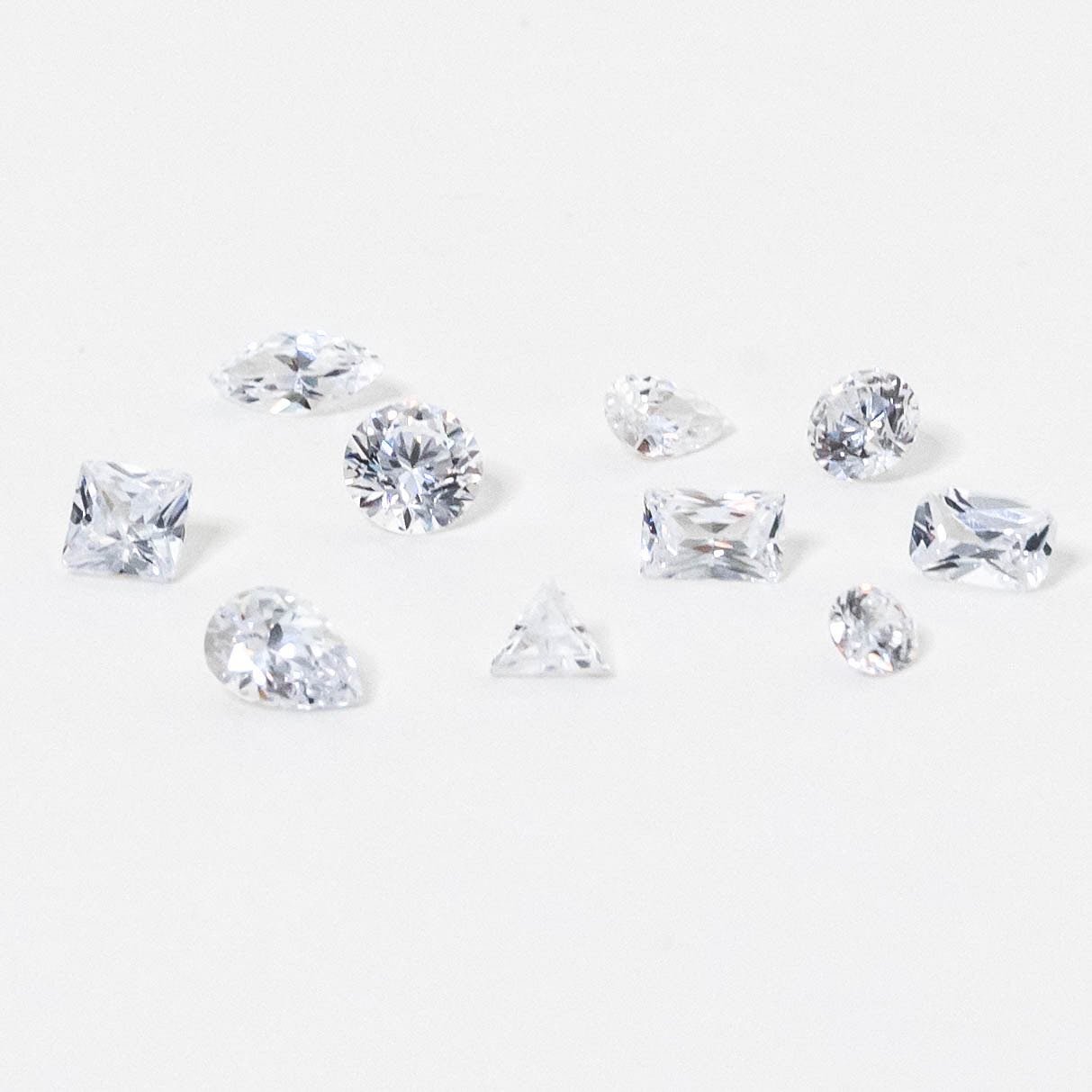
That is why we choose to work with lab-grown diamonds. These diamonds are created in a laboratory, where the natural formation process is replicated
They have a significantly smaller carbon footprint, are of higher quality, and are more affordable than natural diamonds.
The only difference between lab-grown and natural diamonds is their origin (lab-grown vs. mined), since they have exactly the same physical, optical, and chemical composition
Our lab-grown diamonds are fully graded and, if larger than 0.50 carats, come with an official certificate from the IGI (International Gemmological Institute).
Our gemstones
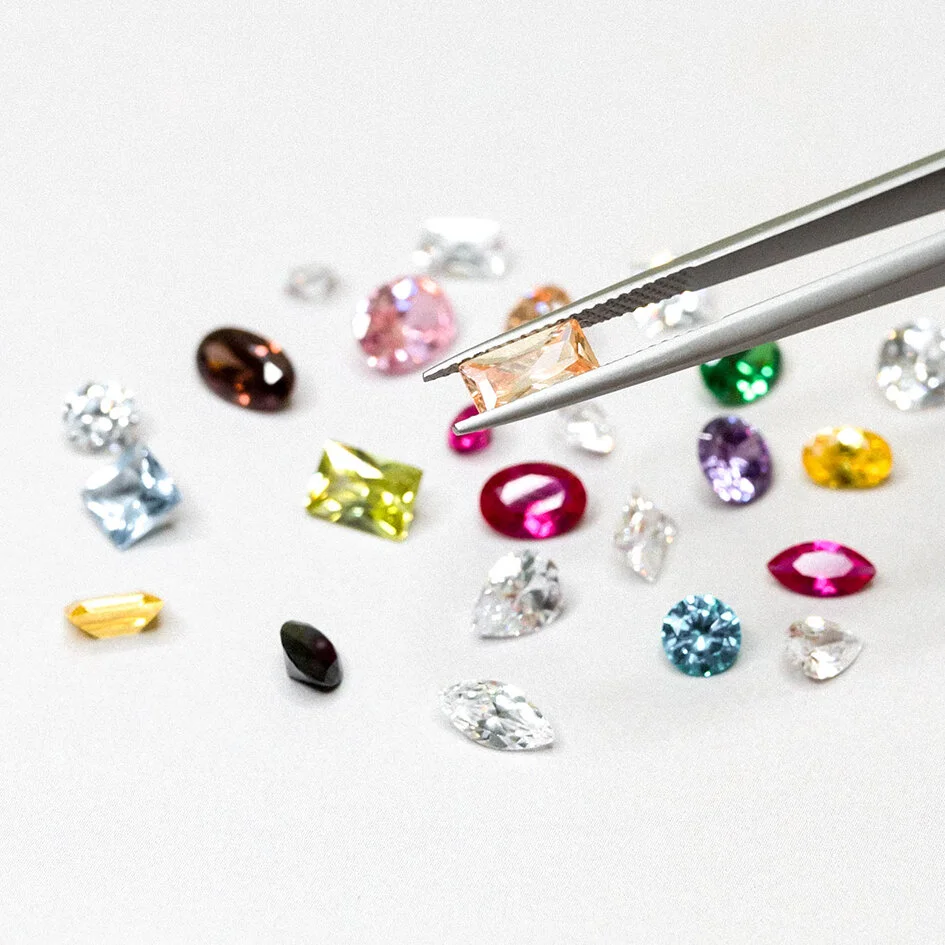
Innovations in the creation process of lab-grown gemstones have also evolved significantly in recent years. Depending on availability and quality, we therefore choose either lab-grown gemstones or natural gemstones.
You can choose from a wide range of options and colors: ruby, emerald, sapphire, topaz, ...
The quality of diamonds and gemstones is universally determined by the 4 Cs: Cut, Carat, Color, Clarity
When choosing diamonds and gemstones, these four factors play a key role. The higher the quality, the higher the value of the stone.
1. Cut

Some examples of possible cuts: round, oval, pear, marquise, baguette, princess, …
These cuts are always available for our lab-grown diamonds. The cuts gemstones depend on the type of gemstone and the desired color.
Of course, all possible cuts can always be reviewed in our studio.
2. Carat

Carat refers to the weight of the stone and therefore directly affects its size.
Our diamonds and gemstones range from 0.001 to 2 carats or more.
For reference: a 1-carat round diamond measures approximately 6.5x6.5 mm. A 0.5-carat oval diamond measures approximately 7x5 mm. During your appointment, you will always receive a clear overview of all the options.
3. Color

Depending on the choice of diamond or type of gemstone, a specific color can be selected.
Colored diamonds are available in clear white, pink, blue, and even yellow. Gemstones are available in almost every possible color: from clear white to various shades of pink, blue, yellow, purple, and more.
4. Clarity

Diamonds have various internal and external characteristics. No diamond is 100% flawless, as each stone is unique. That is why they are classified into different categories. These differences are usually barely visible to the naked eye, but they are always discussed in detail during an appointment.